
Mumbai is considered to a city of dreams. The only difficulty faced here is time. It's really difficult to cope up with time. And so Mumbaikars are very well known for their swiftness. The heart of businesses in Mumbai is its southern part. You must see the influx of people in the mornings into this region. And the biggest problem for the working people is food. They all prefer food which is homemade and hygienic. And this is how the Dabbawallahs come into picture. Many have heard of them. But have you ever thought how they work? Well, here's an insight.....
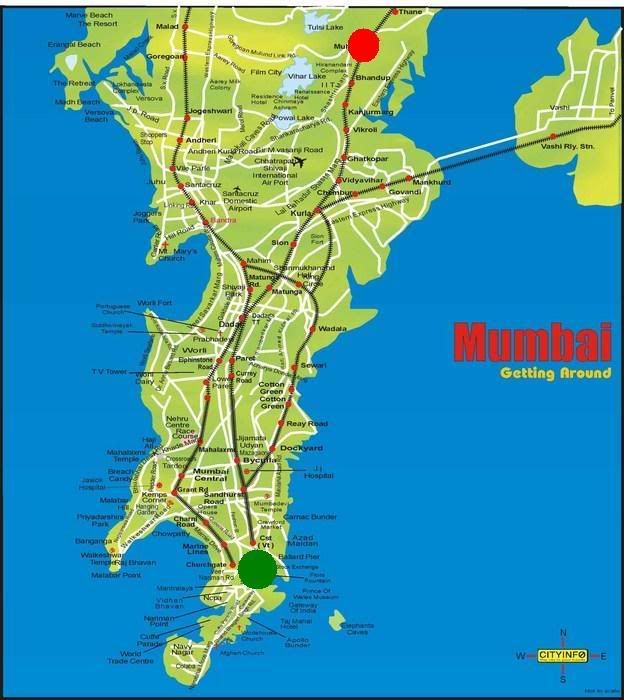 To get a better understanding, we'll mark a place here in Mumbai. Let this place be Mulund. You can see it here in the map in the right top corner. Mr.Batliwala(a fictitious name) has his office in Fort(the lower dot). His wife prepares food at around 8 am. And it should reach him before 10:30 am. As she packs the tiffin, the dabbawallah arrives, sharp at 8. The dabbawallah first takes it, along with many dabbas or tiffins to a central area in Mulund which is decided by them. The second dabbawallah takes several such packs of dabbas from other dabbawallahs and takes it to the Mulund railway station.
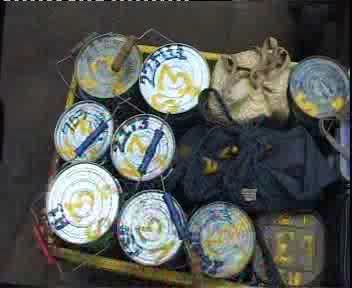
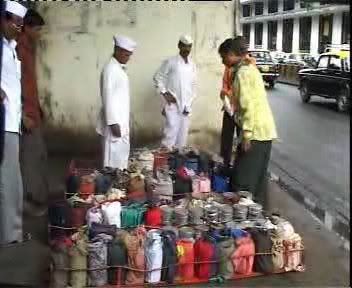
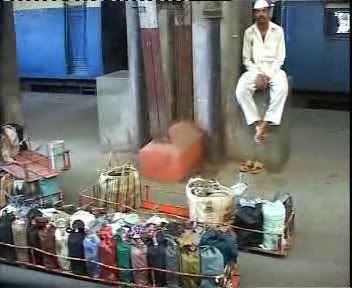
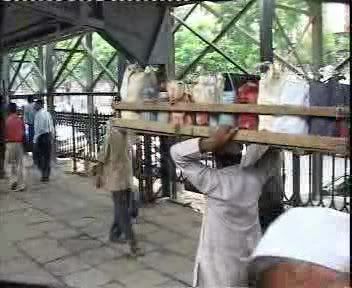
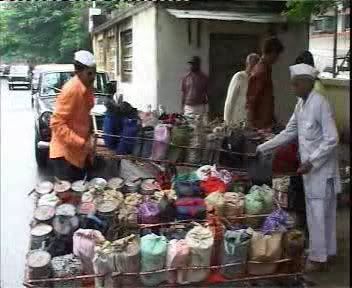
The time is now 8:30. Here with the help of another dabbawallah, he puts all such packages on a cart, and boards it in the next local train towards Mumbai CST. Now, other dabbawallahs already on board receive this cart. As the train moves towards the southern part, the number of such carts increases enormously. And as the train reaches the southern region, the carts reduce one by one as most of the offices are in the south. The train now reaches CST, its final stop. The time is now 9:45. The carts are quickly removed and the packages are sorted according to the areas. The next dabbawallah takes his package and delivers it to that particular area, from where the tiffins are sorted on the basis of their final destination and many other dabbawallahs deliver the tiffins to their respective destinations. And thus, by 10:30 am, Mr.Batliwalla gets his tiffin.
On an average, a tiffin is handled by around eight to ten dabbawallahs on its way. All this sounds really simple, but it's quite difficult considering the transport system and the time. Yet, all this is done everyday without any delay. Based on the location the customers are charged somewhere around Rs.250-300 a month. That is around 7 dollars a month! Be it bright sunlight or a rainy day, dabbawallahs are never deterred.
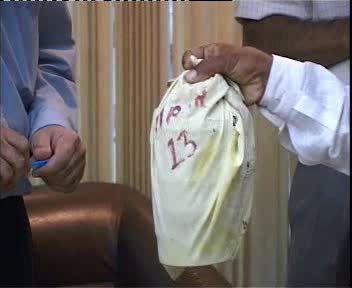
But did you notice the most important thing? Nothing at all is written, only the tiffin are marked according to their destination. The only so called technology used here is the local train. These dabbawallahs, around 1-2 thousand in number, deliver more than 200,000 tiffins in a day! And that too without any paperwork or the use of computers or mobiles or any damn thing, for that matter. These people illustrate the fact that humans can still be ahead without machines..........
What do you think about this? Do you know any other organisation working with such precision without the use of technology? Please leave your comments......
 He won the Noble Peace prize for for his notable work on policies dealing with climate change and global warming. He shared the nobel prize with former US Vice-president Al Gore. Born in Nainital, India, he completed his Industrial Engineering from North Carolina University. He headed many big companies before being elected as the chief of IPCC.
 He catapaulted Tata Steel to the 5th position from 56th! He achieved this by the takeover of Anglo-Dutch steel manifacturer Corus for around USD 11 billion. Tata is the chairman of Tata group, which consists of many companies ranging from manifacture of fertilizers to manifacture of automobiles. And yes, he will be launching the much awaited Rs. 1 lakh car in January,2008.
 He stunned the world after being elected as the chief of CitiGroup, the international conglomerate which includes banking and other financial services. Born in Nagpur, India, he was the former board member of Nasdaq. He also was the president investment and banking section of of Morgan Stanley. CitiGroup ranks 6th in the Fortune 500 list and market capitalization of more than 250 billion dollars.
  The Bombay Stock Exchange continued its upward trend which started in mid 2006. It closed above twenty thousand points, which is double than last year's ten thousand. Many so called 'analysts' said that the Sensex would undergo severe losses due to corrections and government policies. But BSE proved them wrong and bulled theough the 20000 mark. The index is also the world's biggest index with over 800 companies listed.
 After splitting their empire last year after their father's, Dhirubhai Ambani's death, Mukesh and Anil Ambani,have literally doubled their wealth. Maybe, they split their empire just to double it and also gain some media attention. Now, their shares have doubled, their services have improved, and at one point, Mukesh was the world's richest man surpassing even Bill Gates! Now, the brothers are the world's richest.
 The Star of the Millenium is even more ambitious now. He is still India's favourite. The 65 year old's stunning performances include Black, which was specially made for the Oscars. but unfortunately, it wasn't nominated. Even at this age, he continues to maintain his charm. You'll find him in most of the films, and advertisements. He restarted his career after his company ABCL incurred severe losses. ANd from then on, there was no looking back.

